

李吉祥、林義隆、謝福源
Lee Chihsiang, Lin Yilung Lin, Hsieh Fuyuan
Booth B37
30 October - 2 November, 2026
木木藝術將於 2026 ART TAIPEI 台北國際藝術博覽會 展出李吉祥、謝福源與林義隆三位藝術家的作品。三位藝術家以不同的媒材與創作方法,從生活、自然與個人經驗出發,發展各自的繪畫與造形語言。
李吉祥以油畫描繪透過窗花玻璃觀看的日常景象,將光線、玻璃紋理與失焦效果帶入畫面;謝福源以工筆繪畫描寫植物、花卉與季節變化,在細膩的線條與色彩中保留自然景物的細節;林義隆則以陶塑為主要媒材,從生活觀察與記憶出發,探索形體、材料與時間留下的痕跡。
三位藝術家分別以油畫、工筆與陶雕創作,關注生活中累積而來的觀看與經驗。從窗景與光影、植物與季節,到陶土留下的形體與痕跡,各自以不同方式回應時間、環境與記憶。此次展出也將三種不同的創作脈絡放在同一空間中,讓作品彼此對照,呈現台灣當代藝術多元的創作面貌。
ART TAIPEI 2026 將於 2026年10月30日至11月2日 於台北世界貿易中心展覽一館舉行,木木藝術期待於展位B37現場與大家見面。
MUMU GALLERY will present works by three Taiwanese artists, Lee Chihsiang, Lin Yilung and Hsieh Fuyuan at ART TAIPEI 2026. Working across oil painting, ceramic sculpture and ink painting, the three artists draw from everyday life, nature, and personal experience to develop distinct approaches to painting and form.
Lee Chihsiang uses oil painting to depict everyday scenes viewed through patterned glass, focusing on light, glass textures, and blurred vision. Lin Yilung works primarily with ceramic sculpture, exploring form, material, memory, and traces of time. Hsieh Fuyuan works in the gongbi tradition, portraying plants, flowers, and seasonal changes through delicate lines and layered colors.
Bringing these different practices together, the exhibition highlights how each artist responds to familiar subjects through their own way of seeing and making, reflecting the diversity of contemporary art in Taiwan.

#李吉祥,2010年畢業於國立臺北藝術大學美術創作研究所,以油彩為主要創作媒材。
李吉祥長期以油畫進行寫實創作,從日常窗景取材,關注窗花玻璃所形成的光線、紋理與視覺模糊。透過細膩的油彩描繪,他將玻璃與窗後景象交疊所產生的失焦、折射與光影呈現在畫面中。熟悉的生活景象經由玻璃的遮蔽與模糊,產生不同的觀看距離與空間感,也成為他近年持續創作的重要題材。
Lee Chihsiang received his M.F.A. in Fine Arts from Taipei National University of the Arts in 2010 and works primarily in oil painting.His realistic paintings often draw from everyday window scenes, focusing on the light, texture, and blurred vision created by patterned glass. Through detailed oil painting, he captures the refraction, light, and out-of-focus effects created as the glass overlaps with the scene beyond. Familiar views become distant and subtly altered, making patterned glass an important subject in his recent work.

#林義隆,生於台北,畢業於國立台北藝術大學美術系碩士班創作組,主修版畫。
2018 年獲文化部遴選為 Art Taipei「Made In Taiwan-新人推薦特區」藝術家,曾榮獲《2020 桃源美展》版畫類第一名、《新北市美展》版畫類第一名、《105 年全國美術展》與《高雄美術獎》版畫類入選,作品亦被國立臺灣美術館、文化部藝術銀行、宜蘭美術館等機構典藏。林義隆的創作充滿節奏感與宇宙運轉的動態氛圍,他以日常觀察為靈感,將感知與想像揉合,經時間發酵後形成作品中的異獸與空間。這些似動物的形象並非我們熟悉的物種,而是藝術家重新編織出的新個體,承載記憶的感性片段,在其創作宇宙中循環不息。
Lin Yilung is a Taiwanese artist based in Taipei, Taiwan. Lin excels in using clay and intaglio to reconstruct fragments of memory and imagined creatures. His works hover between figuration and abstraction, intertwining the sense of time with sensory experience. His Still Life Series continues his observation of nature and space, using sculptural forms to build a dreamlike worldview that conveys a poetic sensibility about "the fleeting and the eternal."
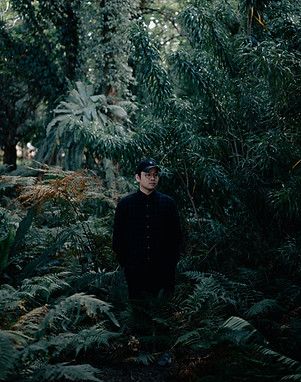
#謝福源,2018 年畢業於國立臺灣藝術大學書畫藝術學系碩士班,求學期間曾赴日本筑波大學日本畫科進行交換生。
謝福源的創作以工筆形式為基礎,透過嚴謹的線條勾勒與層層洗染的技法,展現出細膩而典雅的藝術風格。他善於在色彩與光影之間營造透明感與氛圍感,使畫面在東方繪畫的精神性與西方視覺語彙之間,展現新的交融可能。近期作品中常見的花卉、植物,不僅描繪其外形,更透過色彩的暈染與背景的對比,營造出如夢似幻的光暈效果,帶來一種時間凝止、靜謐而富含追憶氣息的氛圍。
Hsieh Fuyuan was born in 1992 in Tainan. He attended an exchange student for the Department of Japanese Painting in the University of Tsukuba from 2017-2018. He graduated from the National Taiwan University of Art with a master program in Painting and Calligraphy in 2018 .He currently lives and works in New Taipei City . His most artistic technique based on Gongbi. By applying the linear drawing and blending to express exquisite and elegant style through the variation of work’s line and shadow, and trying to explore more possibilities by both Oriental aesthetic and Western arts.
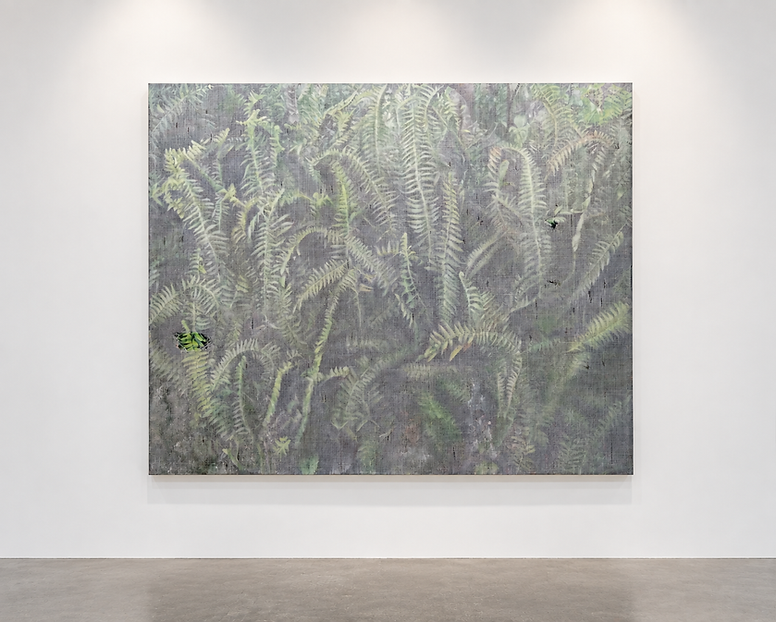
李吉祥 Lee Chihsiang, 生長、平面、隙縫、機率 Growth, Plane, Interstice, Chance, 油彩、畫布 oil on canvas, 162 × 130 cm, 2026
李吉祥以油畫為主要創作媒材,長期關注窗花玻璃帶來的視覺變化。玻璃介於觀看者與景物之間,光線、紋理與反射使原本清楚的景象產生失焦、遮蔽與變形,也讓熟悉的窗景呈現不同樣貌。
攝影是藝術家在創作時重要的參考。透過鏡頭,他觀察景深、失焦與光線的變化,再將這些視覺經驗帶回油畫。對他來說,畫布是影像形成的基底,顏料與繪畫筆觸則用來處理光線、透明度與空間。攝影可以在瞬間留下影像,繪畫則需要經過長時間的描繪與調整,使同一個影像在畫布上留下不同的時間痕跡。這個過程不只是複製影像,也是藝術家對觀看與取捨的選擇,在反覆描繪中留下對創作者對景象本身賦予的理解與情感。
李吉祥的繪畫,將一個流動中的景象凝結在畫布上。窗外的光線、玻璃上的紋理,以及景物一瞬間的狀態,經過長時間的描繪後被留存下來。那些原本短暫而容易被忽略的片刻,因為繪畫而得到停留,也成為藝術家留給這些景象的一種注視。
LEE Chihsiang works primarily in oil painting, focusing on the visual effects created by patterned glass. Positioned between the viewer and the scene, the glass alters familiar views through light, texture, reflection, blur, and distortion.
Photography is an important reference in his practice. He uses the camera to study depth of field, focus, and changes in light, then brings these observations into his paintings. For LEE, the canvas becomes a surface for forming an image, while paint is used to recreate light, transparency, and space. Photography captures a moment instantly, while painting requires time and repeated adjustments, allowing the same image to take on a different sense of time. This process is not simply about reproducing an image, but about deciding what to observe and what to preserve.
LEE 's paintings hold fleeting moments in place. Light through a window, the texture of glass, and brief changes in a scene are slowly translated onto the canvas, giving ordinary moments a lasting presence.
%E7%B6%B2%E8%B7%AFjpg.jpg)
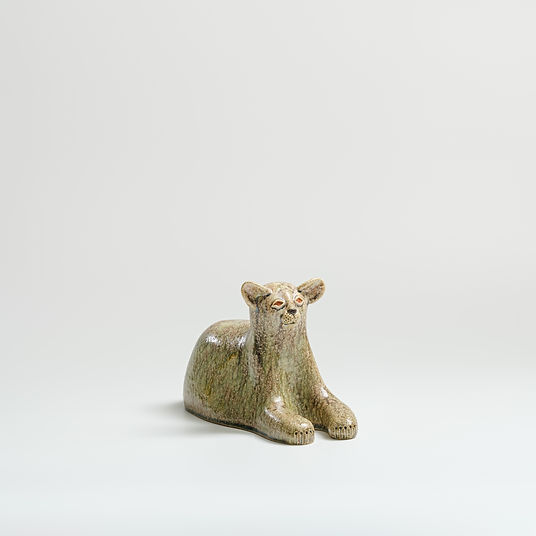
林義隆 Lin Yilung, 須彌-027 Still life-027, h.16.5×w.12.5×d.29cm, 陶 ceramic , 2026
林義隆自2023年開始發展「須彌系列」,以陶土作為主要媒材,將日常觀察與對時間的思考放進作品之中。「須」代表片刻,「彌」則指向長久,系列名稱本身便帶有對時間長短的對照。
相較於較具明確形象的早期作品,須彌系列以較完整、簡化的個體形態呈現,讓作品與自然、空間之間保有更大的想像。陶土在塑形與燒製過程中留下的手感、紋理與層次,也成為作品不可分割的一部分。
對林義隆而言,陶土需要時間完成,而作品也在這個過程中逐漸形成。從一個日常所見的片刻,到最後留存在陶土上的形體,須彌系列將短暫的觀察與長時間的製作放在一起,形成作品獨有的時間感。
Lin Yilung began developing the Still Life series in 2023, using clay as his primary medium. The series draws from his observations of everyday life and his reflections on time. The title refers to the contrast between the fleeting and the enduring, reflecting his interest in the different scales and experiences of time.
Compared with his earlier works, which often featured more clearly defined forms, the Still Life series presents simplified, self-contained forms, leaving more room for imagination in relation to nature and space. The textures, traces, and layers created through the shaping and firing of clay also become an integral part of the works.
For Lin, working with clay is a process that takes time, and the forms gradually emerge through this process. From a fleeting moment observed in everyday life to the form that remains in clay, the Still Life series brings together brief observations and the long process of making, giving the works a distinct sense of time.

謝福源 Fuyuan Hsieh, 沐雨 In the Rain, 墨、壓克力、礦物顏料、紙本 ink, acrylic and pigment on paper, 20 × 25 cm, 2026
謝福源以工筆繪畫為基礎,近期以植物、花卉與自然景物為創作題材。細密的線條與層層設色,是他描寫植物的重要方式。葉片、枝莖與花朵經過仔細描繪,保留自然形態中的細微差異,也讓畫面累積出豐富的細節。
作品中的植物常以較單純的背景呈現,使花卉與枝葉成為畫面的主要視覺焦點。經過反覆堆疊,從明暗、濃淡到不同色層的交疊,逐步呈現植物的質地與空間。近年的創作加入較自由的筆觸與構圖方式,讓工筆原有的細密線條與不同的繪畫手法並存。
謝福源從植物與自然景物出發,觀察光線、空氣與季節變化,將日常所見的景象轉化為畫面,也在傳統工筆的基礎上發展出自身的高度辨識語彙。
Hsieh Fuyuan’s practice is rooted in gongbi painting, with plants, flowers, and natural scenery as recurring subjects. Delicate lines and layered colors allow him to capture the subtle details of leaves, stems, and flowers.
His works often place plants against simple backgrounds, bringing focus to their forms, textures, and colors. Recent works also incorporate freer brushstrokes and compositions, expanding his approach to gongbi painting.
Drawing from observations of light, atmosphere, and seasonal changes, Hsieh continues to develop a distinctive visual language rooted in traditional gongbi painting.
藝術家林義隆主修版畫,以銅版蝕刻(Etching)為主要創作技法。《圖鑑集》系列延續了他對細節與結構的持續探索,宛如一部呈現其創作旅程的視覺百科全書,清晰地展現出藝術語彙與個人思維。每一道刻畫皆蘊含深層的情感與心靈歷程。
LIN majored in printmaking and primarily works with copperplate etching. His Daydream series continues his exploration of detail and structure, serving as a visual encyclopedia of his artistic journey. It clearly presents his visual language and personal reflections, with each etched line embodying profound emotion and the traces of his creative path.
林義隆 Yilung Lin, 圖鑑集-016(日) Daydream- No.16 (in the day), 銅版蝕刻 Etching, 20 × 20 cm, 2024, TWD 23,800